FREE shipping on orders over US$200
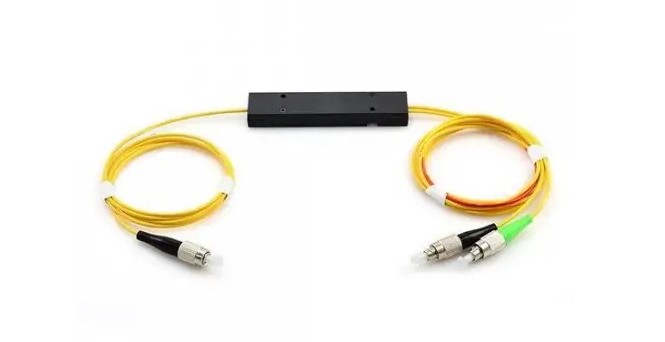
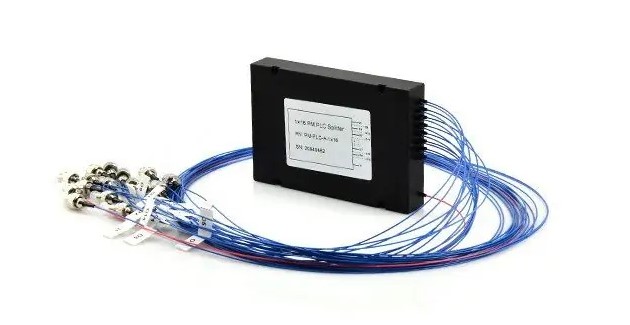
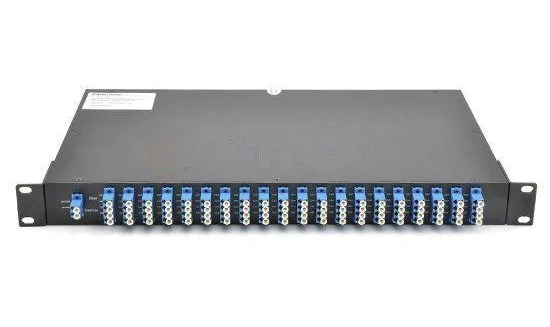
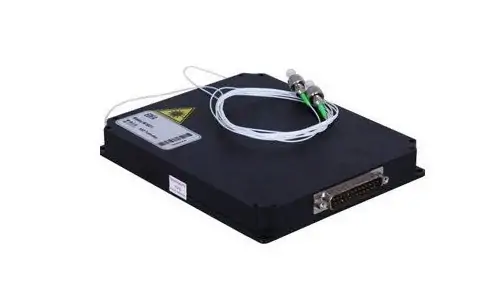
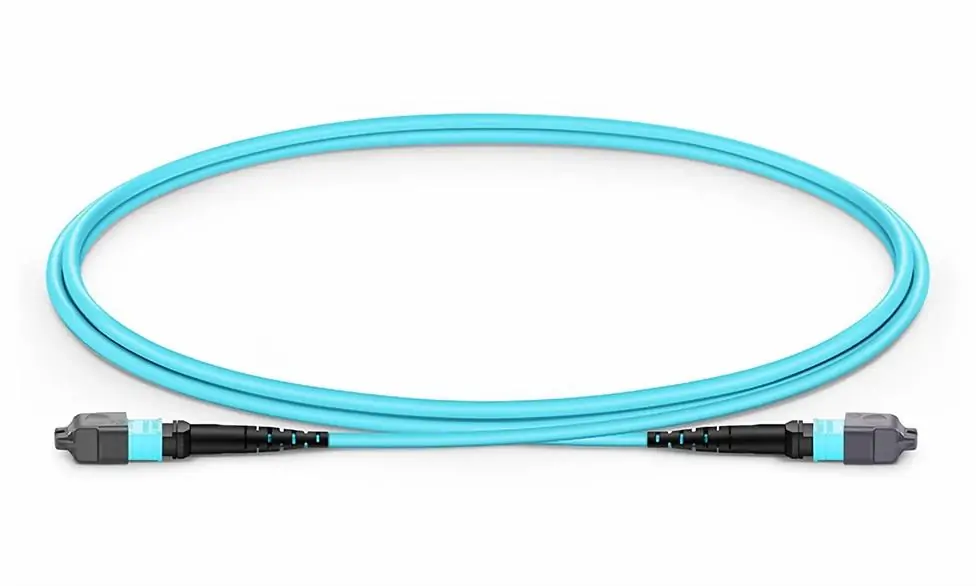
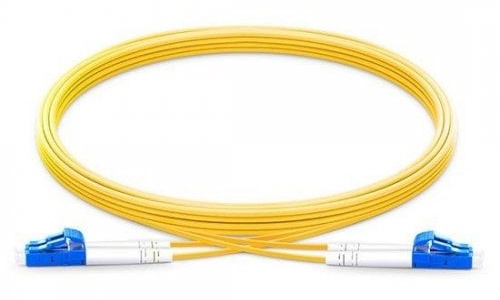
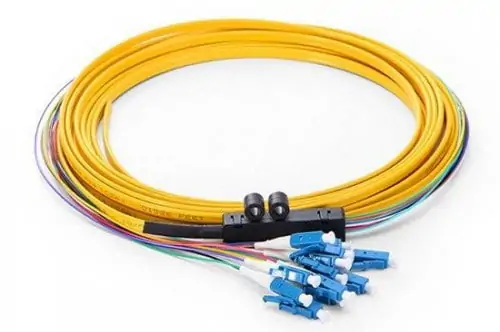
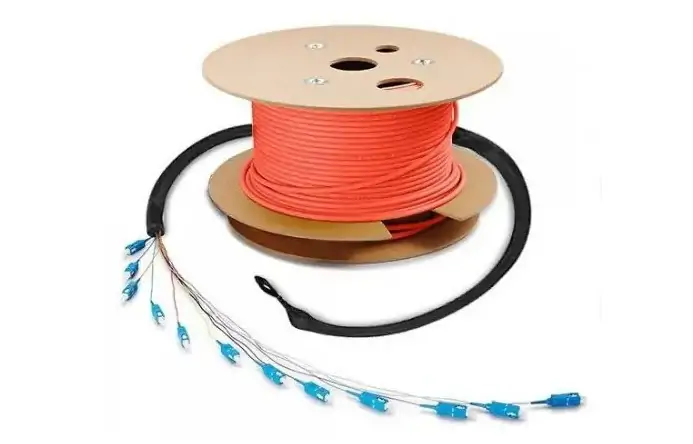
In the frontiers of optical fiber communications, quantum computing, and precision sensing, the stability of an optical signal’s polarization state is not just a preference—it is the definitive factor in system performance. As a cornerstone of optical manipulation, the Polarization-Maintaining (PM) Fiber Splitter leverages sophisticated structural design to provide rigorous control over both power distribution and polarization integrity.
Understanding the Core Mechanism
A PM Fiber Splitter is a passive optical component engineered from polarization-maintaining fiber (PMF). Unlike standard splitters that only manage power, a PM splitter ensures the incident light’s polarization state remains unchanged across all output ports.
The Role of Birefringence
The device operates on the principle of birefringence. By integrating asymmetric stress-applying parts (such as the “Panda” or “Bow-Tie” structures), the fiber creates two distinct principal axes:
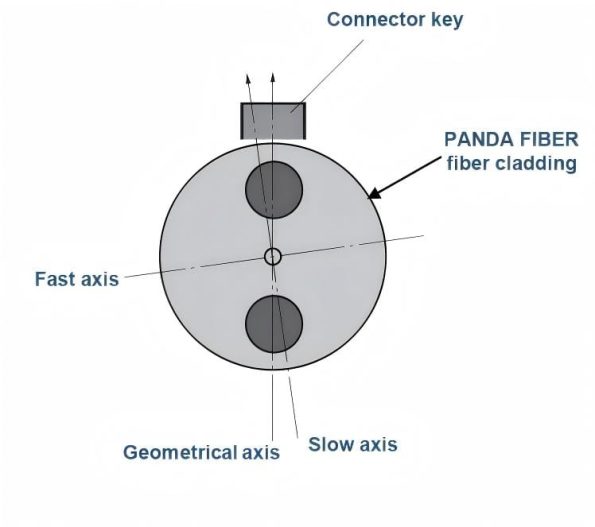
- Fast Axis: The direction with a lower refractive index, allowing faster light propagation.
- Slow Axis: The direction with a higher refractive index, where light travels slower.
When linearly polarized light is launched along one of these axes, it remains stable over long distances. However, any misalignment leads to polarization crosstalk, where power couples between the two axes, degrading signal quality.
Manufacturing Technologies
To achieve precise splitting while maintaining these axes, three primary technologies are utilized:
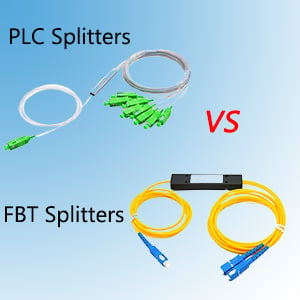
- Fused Biconical Taper (FBT): Multiple fibers are fused and stretched to create a coupled waveguide.
- Planar Lightwave Circuit (PLC): Semiconductor processes create waveguide arrays on a chip for high-density, precise distribution.
- Micro-Optics: Uses precision lenses and capillaries to manage the optical field.
Critical Performance Metrics
For engineers, evaluating a PM splitter requires looking beyond standard loss metrics to specific polarization parameters:
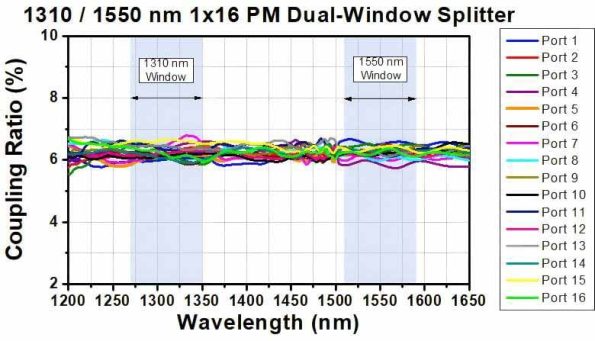
- Polarization Extinction Ratio (PER): The most vital metric. It measures the ratio between the powers of the two orthogonal polarization modes. High-tier splitters typically achieve a PER of ≥25 dB.
- Polarization Dependent Loss (PDL): This measures how much insertion loss varies as the input polarization changes. Premium PLC splitters can suppress PDL to <0.1 dB.
- Insertion Loss (IL) & Uniformity: Typical high-quality IL is <0.5 dB, while uniformity ensures power is balanced across all channels.
SunmaFiber PM Splitter Specifications
| Parameter | 1×2 | 1×3 | 1×4 | 1×6 | 1×8 | 1×12 | 1×16 | 1×24 | 1×32 | 1×64 |
| Operating Wavelength (nm) | 460, 630, 780, 980, 1310, 1550 or Custom | |||||||||
| Insertion Loss (dB) | ≤3.8 | ≤6.2 | ≤7.0 | ≤9.4 | ≤10.2 | ≤12.6 | ≤13.5 | ≤15.8 | ≤16.6 | ≤21 |
| Uniformity (dB) | ≤0.3 | ≤0.5 | ≤0.4 | ≤0.6 | ≤0.4 | ≤0.8 | ≤0.6 | ≤1.1 | ≤0.8 | ≤1.5 |
| Extinction Ratio (dB) | ≥23 | ≥23 | ≥23 | ≥22 | ≥22 | ≥22 | ≥20 | ≥20 | ≥18 | ≥18 |
| Return Loss (dB) | ≥50 | ≥50 | ≥50 | ≥50 | ≥50 | ≥50 | ≥50 | ≥50 | ≥50 | ≥50 |
| Power Handling (mW) | 500 | |||||||||
| Fiber Type | PM1310 or PM1550 or Custom | |||||||||
| Connector Type | LC, FC, SC, E2000, MPO, MTP | |||||||||
| Fiber Length (m) | 1 or Custom | |||||||||
| Operating Temperature (°C) | -5 ~ +70 | |||||||||
| Storage Temperature (°C) | -45 ~ +85 | |||||||||
Note: For device with connector, IL is 0.3dB higher, RL is 5dB lower, ER is 2dB lower.
High-Impact Applications
- Fiber Optic Gyroscopes (FOGs): PM splitters are essential for Sagnac interferometers, enabling bias stability better than 0.001°/h.
- Quantum Key Distribution (QKD): Used in BB84 protocols to prepare four-state polarization-encoded photons. A PER of 25 dB can reduce quantum bit error rates to under 1.2%.
- Coherent Communications: Enhances 100G/400G receiver sensitivity by 2 dB, effectively extending transmission distances.
- Biomedical Imaging: Improves the resolution of Optical Coherence Tomography (OCT) by maintaining polarization state throughout the imaging path.
Selection Guide: Choosing the Right Splitter
When specifying a PM fiber splitter, consider the following technical configurations:
- Axis Alignment: 0-degree alignment (Slow-to-Slow) is standard, but 90-degree and 45-degree alignments are available for specialized interferometers or depolarizers.
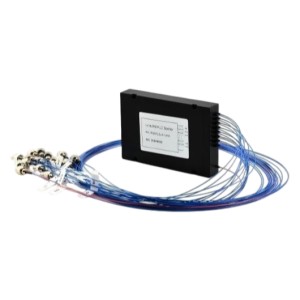
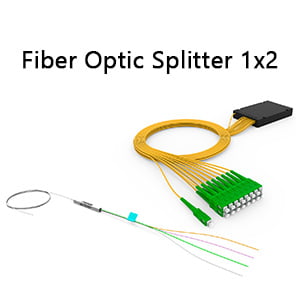
- Package Type: Options range from Miniature Steel Tubes for tight spaces to 19-inch Rack-mounts for data centers.
- Fiber Type: Ensure compatibility with your system, whether using Panda (most common), Bow-Tie, or Elliptical Clad fiber.
FAQ
- Can a PM Splitter be used as a Combiner? Yes. They are bi-directional devices. However, be aware that the split ratio and loss will apply in both directions.
- What is “Directivity”? Directivity measures unwanted light leakage between output ports. It quantifies how much light intended for one output is reflected into another.
- Does the split ratio work for both axes? Standard off-the-shelf units are optimized for Slow Axis propagation only. If your application requires uniform splitting on both the Fast and Slow axes, this must be requested as a custom order.
- Are you looking to optimize your optical architecture? SunmaFiber provides 100% QC-tested PM solutions tailored to your specific wavelength and packaging needs.